

Artikel ini juga tersedia dalam bahasa Indonesia. Klik tautan ini untuk membacanya.
Many Japanese pop culture enthusiasts enjoy playing games. Gaming remains an inseparable part of modern culture, encompassing games with gacha mechanics, multiplayer systems, and more.
One phenomenon that stands out within the gaming community is discussions about identifying which games are “for boys” or “for girls”. The gaming industry has come up with games in different genres and visual styles released for different platforms. However, there’s also another set of perceptions that determines the “supposed” players of a game. This judgment falls not only on Japanese or anime-style games, but also on popular games outside the Japanese pop culture sphere.
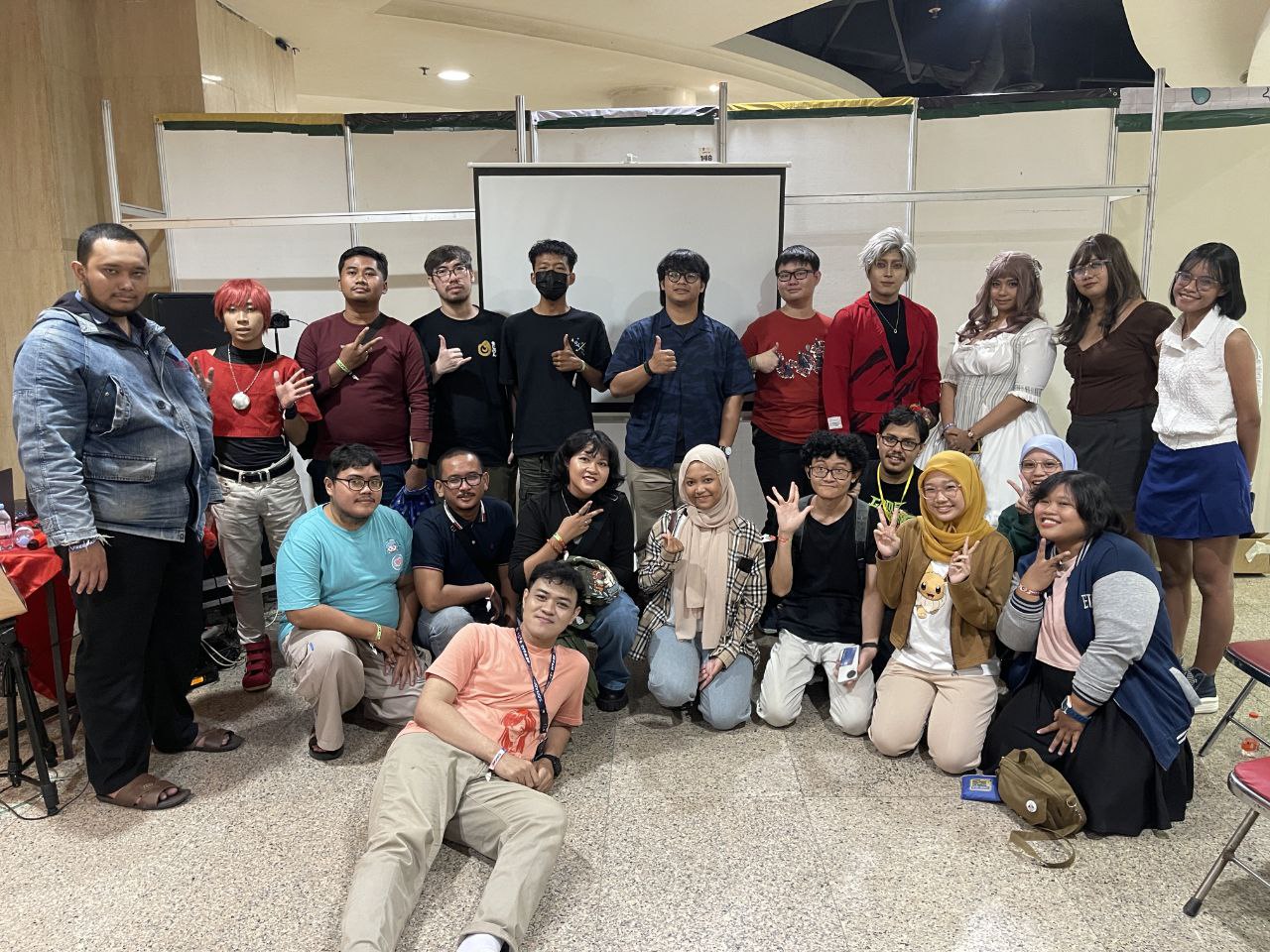
KAORI Nusantara decided to bring this discussion further onto the tables of Forum Anime Indonesia (Indonesian Anime Forum), making its return as part of the event lineup for Chibicon Surabaya on 27-28 June 2025. Under the topic Games for Boys and for Girls: What Sets Them Apart?, the two-hour-long discussion not only dives into gender stereotypes in the gaming world, but also why people play games, gaming industry approaches towards their audience, and the cultural shift that influences gaming as a whole.
Gender Labelling in the World of Gaming
The discussion was opened with a single question: why are certain games labelled “for boys”, and others “for girls”?
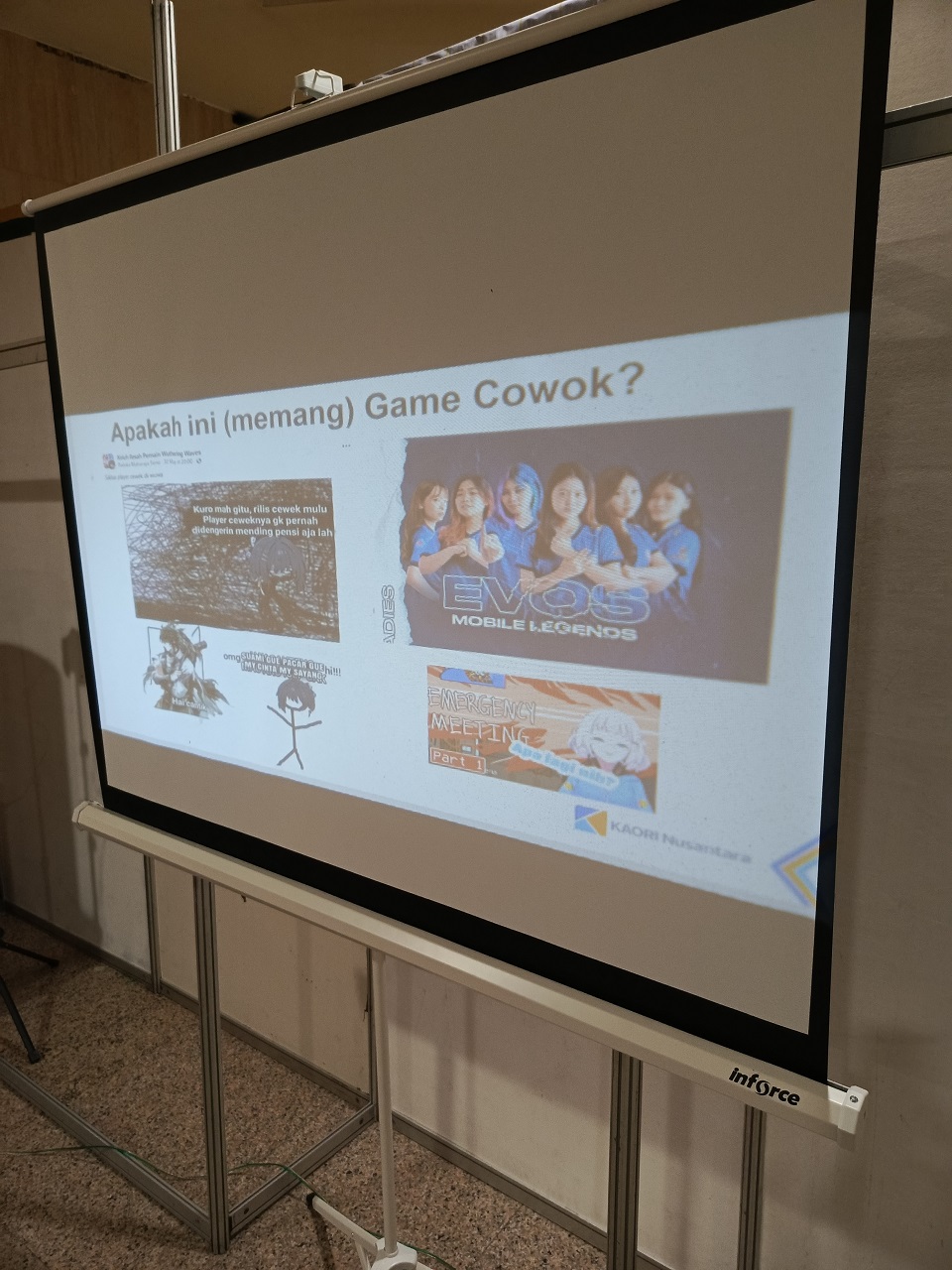
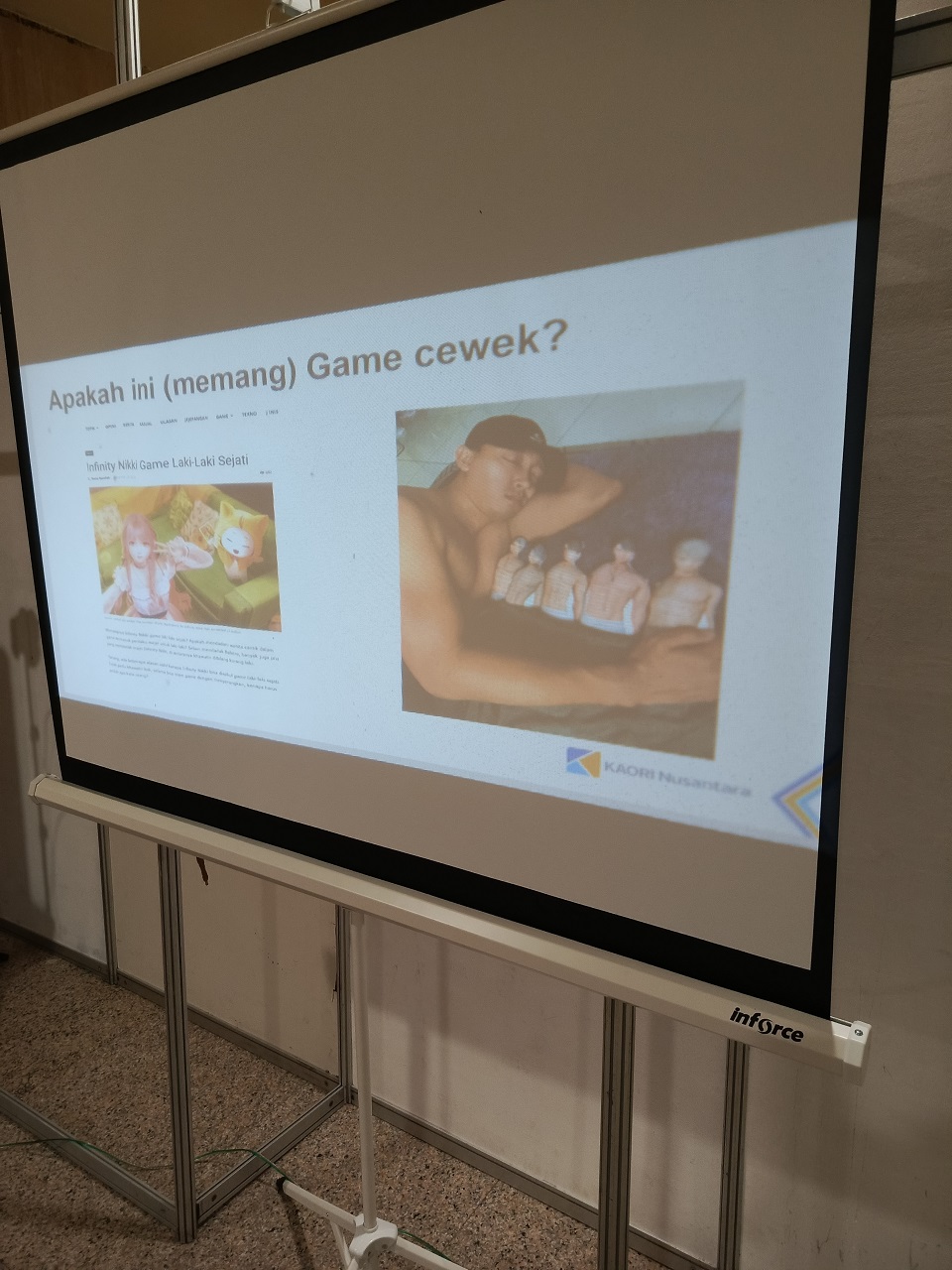
Rizal, a participant from Surabaya, called back to the era of web-based games playable on Facebook around 2010-2011. He reminisced about the times when games like the simulation game Pet Society were considered for girls based on its cute visuals, while shooting games or other violent games of the sort were classified as games for boys. Rizal believed these labels were first assigned by certain game fandoms (communities) who refused to see the games they play as equals to other games. In order to assert their individual qualities, these fandoms would label other games with certain attributes that later stuck as a specific label. For example, the RPG shooter game Goddess of Victory: Nikke is labelled as “booty game” (game bokong), while the 3D dating sim Love and Deepspace is labelled as “homosexual game” (game jomok). As an additional note, both of these labels are derogatory in the sense.
Rizal’s argument was countered by Erika, who worked as a data analyst and called herself a “chameleon gamer” (most likely referring to herself as someone who played all types of games). Erika did not consider fan services that are referred to by aforementioned labels as key points that determine whether it’s a “boy” or a “girl” game. In her opinion, gender labelling of a game comes from social media and player interactions, as well as market analysis conducted by the developers.
HazePeachy, as a content creator, raised a different perspective, mentioning the times when MMORPG Ragnarok Online was at its peak popularity. Back then, assassin and hunter roles were commonly associated with male players, while healers were considered more fitting for female players. However, you could still find lots of male players behind support roles, and there were also plenty of female players opting for aggressive positions. “Stereotypes do not come from the game, but the gaming community’s own perception,” she explained.
A researcher among the participants contributed an academic insight by citing an article they once read, revealing that Sega and Nintendo initially aimed for men as their primary marketing target in the 1980s. The initial perspective was that women might still play games marketed for men, but not the opposite. Such impressions had shifted as time and technological advances allowed the market to gradually become less gender specific.
Reasons to Play Games: Financial, Social, and Fun Factors
When participants discussed why someone decides to play games, Bryant reasoned that games like the MOBA game Mobile Legends incorporate cool hero designs and skills, while Laila admitted that, despite first taking interest in character visuals, her enthusiasm later branched out to the fantasy setting and the timed challenges in games.
Andy Phebe, who was a cosplayer, had reasons completely unrelated to gameplay aspects. He decided to play certain “girl” games so he could sell his cosplay products and understand the characters he cosplayed better. HazePeachy seconded this notion as a fellow creative worker. She admitted that there were times she had to pick up and stream games she wasn’t really interested in so she could stay relevant with her friends or audience.
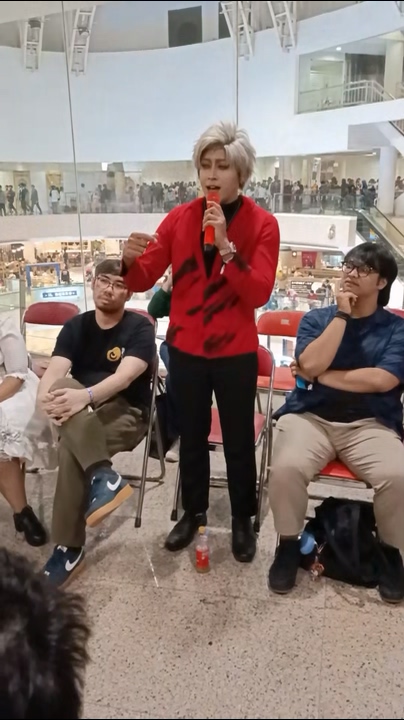
Certain participants revealed their socially influenced choices in playing games. A participant from Karawang, Rian, admitted that other than its character designs, he started playing the mobile rhythm game Project Sekai so he could make his friends “salty” (wanting to show off to his friends). Rizky, who streamed on Twitch, also had a friend who made him pick up the dress-up action adventure game Infinity Nikki before he started enjoying the gacha mechanics himself. “It’s interesting that they made us pull for costumes instead of characters in this game,” according to him.
All these perspectives rounded off into an interesting summary: not all gamers picked up a game solely based on personal interest. Aside from trends, fandoms, and peer influences, there are also financial factors contributing to the decision of choosing which game to play. Content creators like HazePeachy, Andy Phebe, and Rizky may have played games typically labelled for genders opposite to theirs for “economic purposes”, like attracting a wider audience or understanding what their pre-existing fans like.
Gender-Based Market Targeting: An Industry Insight from Game Developers
Do game developers create their works with gender-specific target markets in mind? Eka of Mojiken Studio participated in this discussion with an intriguing insight. Mojiken, as a game development studio, does not set apart gamers based on their gender. Instead, they utilise a colour system which represents different types of players: “Red” players are more interested in action games, “yellow” players seek socialising experiences, “green” players pay more attention to narratives or emotional engagements, and the sorts. Eka believed developers who aim their games for everyone to enjoy will usually not achieve satisfying results. He considered it necessary to have a specific target, but it doesn’t have to be gender specific.
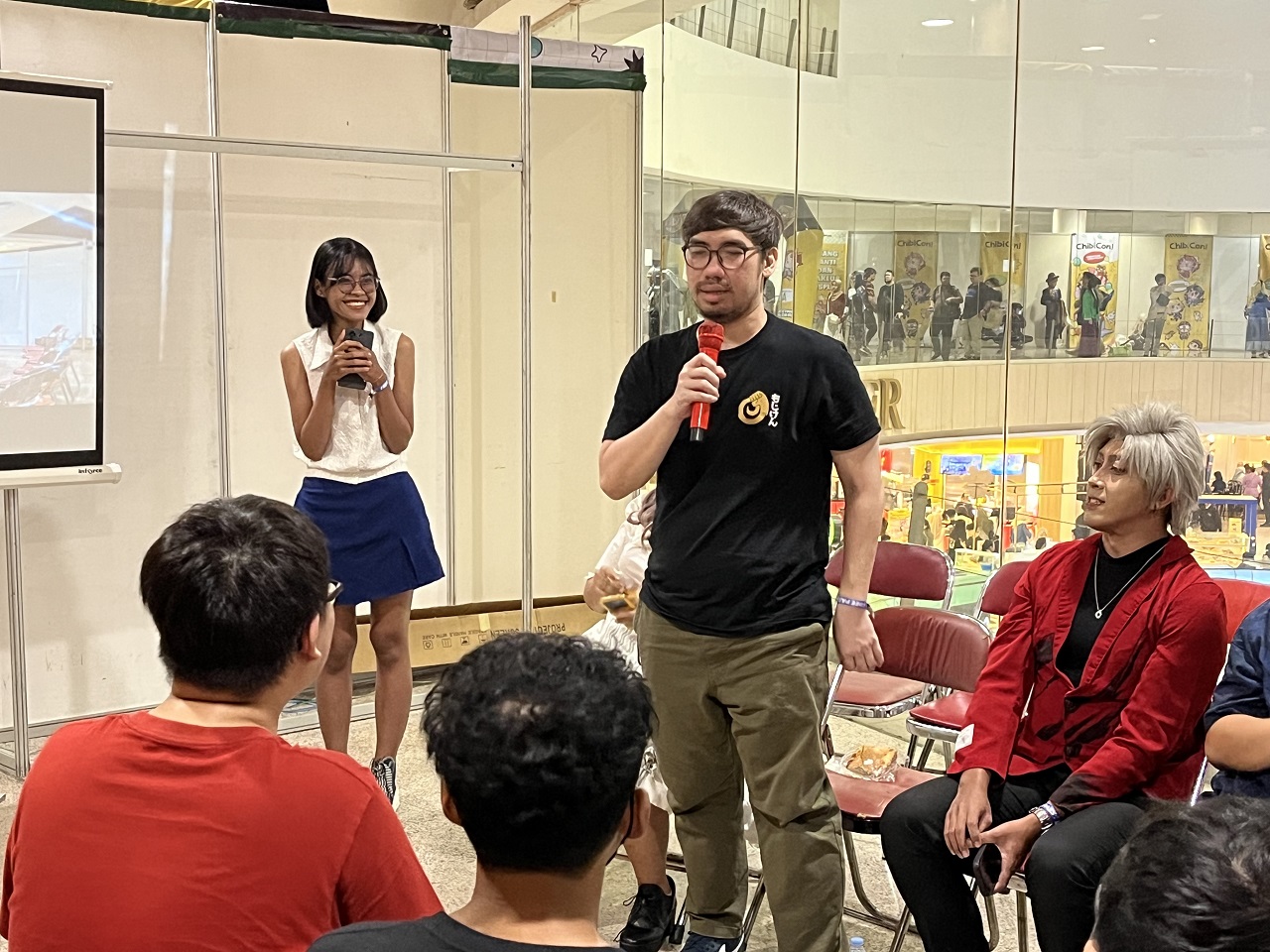
This colour system became an interesting fuel for the dialogues. Myon from the Atlus Info ID community added that certain games like the Persona or Shin Megami Tensei series indeed put more emphasis on the spectrum of humanity with certain themes and personalities rather than the gender of the players.
Chief editor of KAORI Nusantara, Kevin, also made an attempt to further visualise this approach. He pointed out that certain choices of visual styles or techniques, character placements in the story, and other specific details may feel more engaging for audiences of different genders. However, this should be perceived as artistic consequences rather than a deliberate attempt to target players of certain genders.
However, Aifa, a participant with literary knowledge, argued this notion by bringing up the reception theory. A creator’s work might have its own intended purposes, but said purposes may not be fully conveyed to its audience due to the difference in their personal perspectives. Labels in the sort of “games for girls”, “games for boys”, and “fanservice games” might also spawn from the differences in interpretation.
Conclusion: Gender Labelling on Games Grows Irrelevant
Despite the existence of gender labelling in the gaming community, games are not as easily categorised “for boys” or “for girls”. As a game developer, Eka asserted that game players cannot be generalised in that manner. Gamers possess a wide scope of preference which cannot be determined solely based on their gender, but rather by life experiences, social backgrounds, and personal motivations.
Andy Phebe also added another crucial element, which is geographic factors. Citing his personal data, there are instances where a character might be particularly popular in certain areas and not as much in others. This shows how cultural and regional preferences have more influence on the market than gender.
The discussion concluded that labelling games “for boys” and “for girls” derived from community and fandom perception rather than the game itself. As time goes by, gender labels are dismissed, and gamers find their common denominator in their love for gaming, regardless of types and genres. As one participant conveyed, “At the end of the day, we all just want to play the games we like.”
The Indonesian Anime Times