
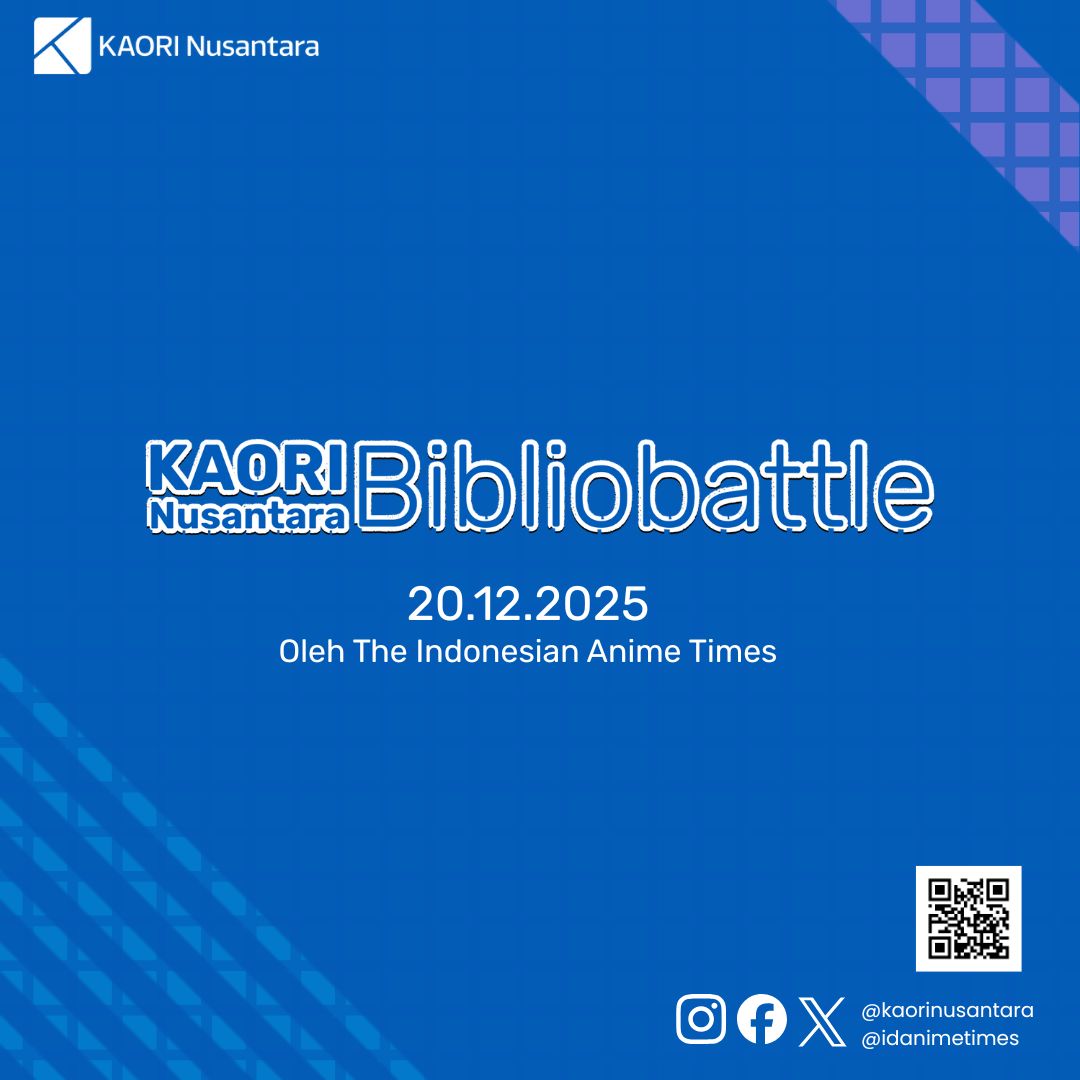
KAORI Nusantara Bibliobattle continues! The fourth session of bibliobattle was held on 20 December 2025. This session gathered 6 participants, including 2 duelists who gathered at KAORI Nusantara Discord server to share and discuss the media they’re passionate about. This time, the KAORI Nusantara Bibliobattle brought “manga” as the theme to the table.
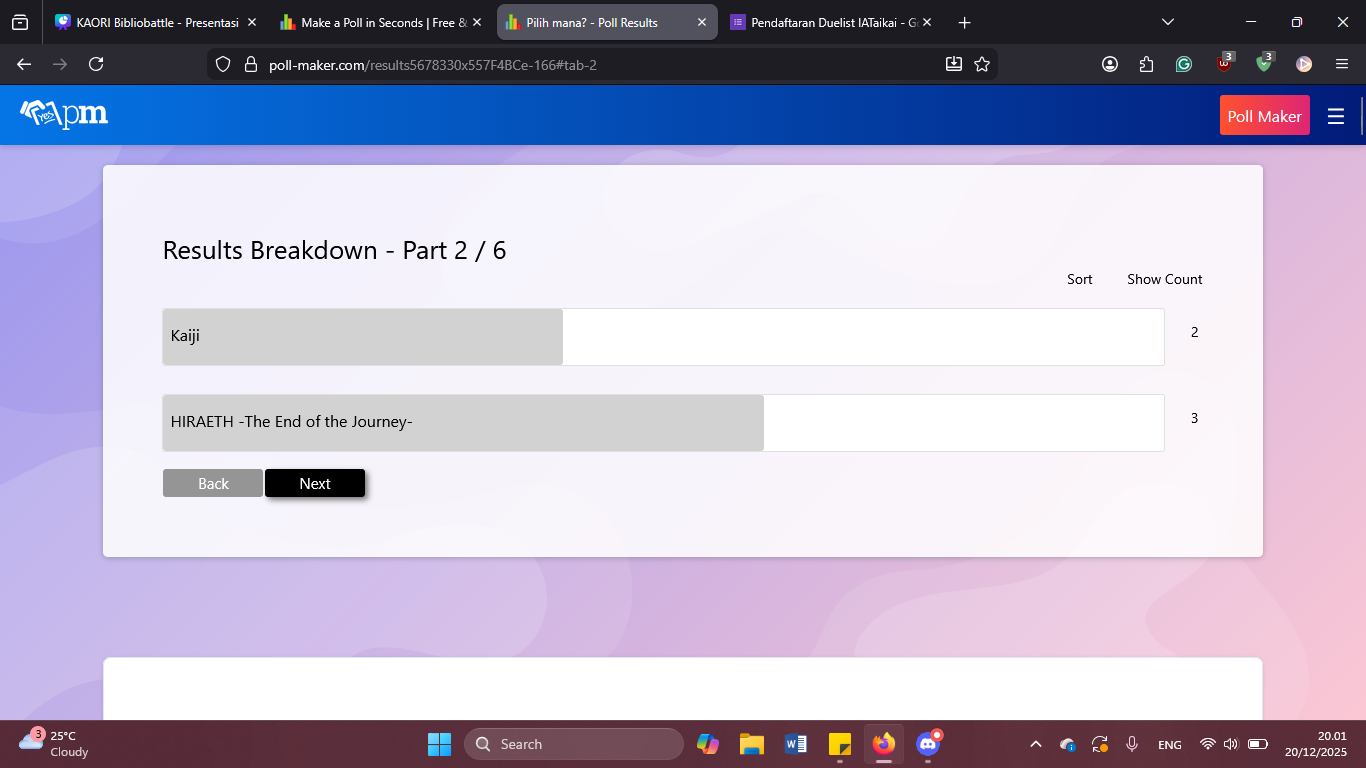
 The steps are still the same steps from the earlier bibliobattle sessions. But as this bibliobattle session carried a different medium than before, we adjusted the watch-along session into a silent reading session after we voted.
This session recommended two totally different manga. The first one is Kaiji, a manga written and illustrated by Nobuyuki Fukumoto, presented by Duelist Cakra. The second one is Hirateh: The End of The Journey, written and illustrated by Yuhki Kamatani, presented by Duelist Shay.
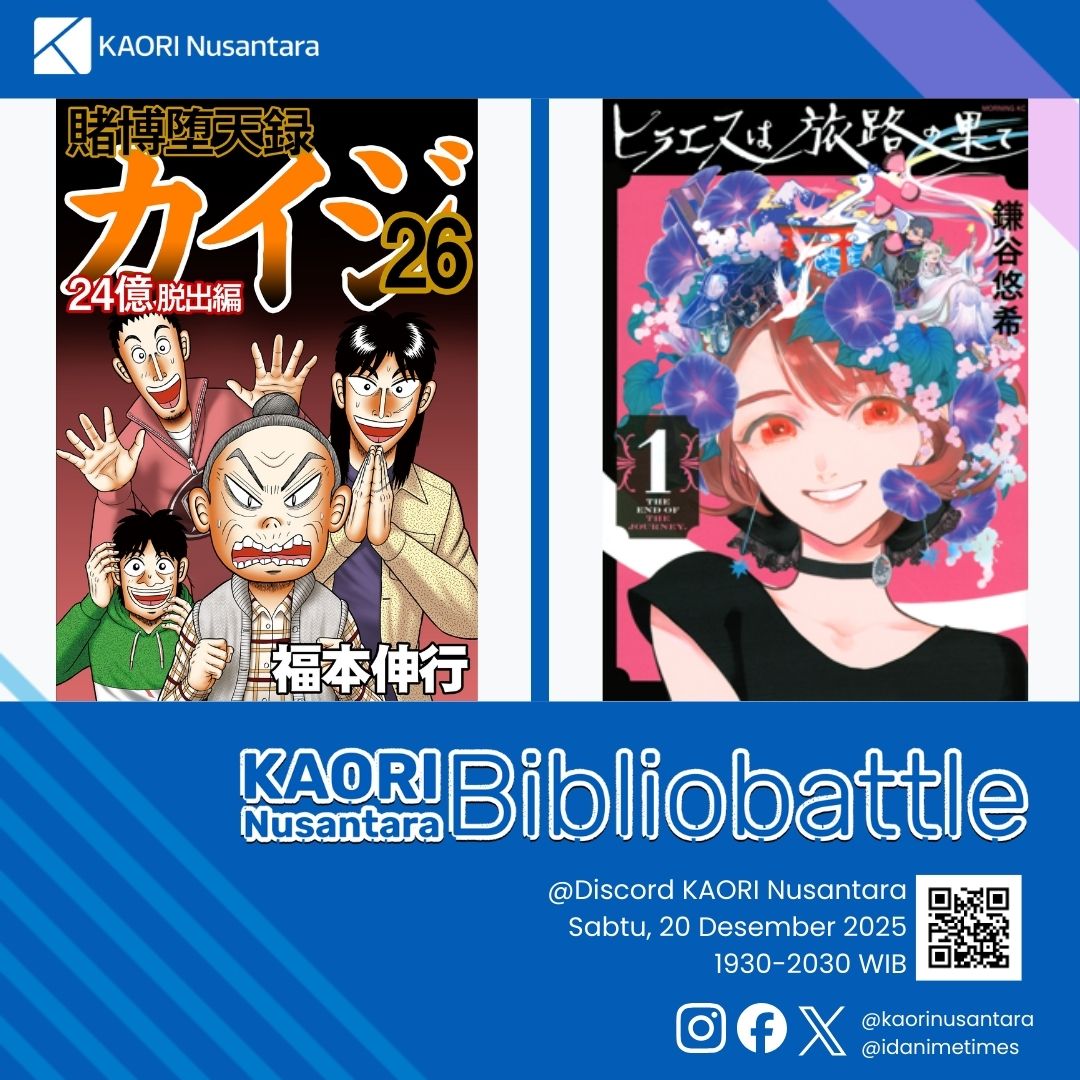
Here are the entries:
“Entangled in debt? Loan sharks? Credit card debt? Or other debts? How about gambling? Of course, your chances of winning are slim, and you’re more likely to lose and end up in even more debt. However, what if you used irrelevant reasoning and logic to outwit the system and win big? Well, this is Kaiji, a comic that will keep your curiosity, compassion, and adrenaline pumping with every chapter! The main strength of this manga is how it touches on the “real human” aspect of its story.” (Cakra, The Indonesian Anime Times)
“The rough premise of this work actually sounds like a joke: a human, an immortal, and a god walk into a bar ride a motorcycle with a sidecar into the afterlife. Three characters with different lives, but all ‘chasing’ death. As they journey to find the end of life, they meet various people who have their own views on life and death. Although the topic seems dark, the story is beautifully illustrated and often full of meaningful and majestic visual details.” (Shay, The Indonesian Anime Times)
After the presentation, the participants moved into a Q&A session. Vina asked Kaiji’s derivative works from the manga, one of which was a live-action serial published more than a decade ago. Cakra stated that the live-action did not follow the manga storyline; however, the anime adaptation did. The anime adaptation has more suspense than the live-action, and it has the manga’s unique sound effect “zawazawa”. On the other hand, Dany asked Shay if Hiraeth is a shoujo manga. Strictly speaking, Shay stated, Hiraeth was published in a seinen magazine. The cover may look “fuwafuwa”, but the content itself was kind of depressing. Hal also asked if both manga have episodic chapters throughout the story; for Kaiji, it has story arcs throughout the story, and each arc has different settings. For Hiraeth, it does have episodic chapters in the entire serial. Kaji also has several spin-offs, the most popular one being about a salaryman living in debt.
Going into the silent reading session, participants were asked to read independently and return after 30 minutes had passed to discuss their impressions. The participants finished 2-4 chapters in the session. The first comment came from Vina, who was only able to read 2 chapters:
“I like the consistency presented in the story. In the first chapter, every time the Human’s deceased friend appeared in the form of memories and flashbacks, they always had a certain type of flower surrounding them (the flower was known as morning glory). Seeing the consistency of the flower’s appearance, it must symbolise something, just like in the language of flowers. In the second chapter, the consistency appears in the form of disconnected relationships in each character. The Human had her friend die, The God lost its believer, and The Immortal separated from death. Three lonely entities disconnected from the world, the cycle, seeking an ending.”
The next comment came from Cakra, who stated that he was confused about where the story would go. The initial goal for the characters was to reach Yomi, which is the afterlife in Shinto religion. And The God is also a god in folklore, in the Shinto religion. Vina added that the manga was not as melancholic as expected; it had a more carefree (but depressing) feeling. Shay nodded in agreement, saying she likes slice-of-life manga that makes her think about life. Hal commented that, in chapters 3 and 4, there’s a contrast in perspective between Mika, who is still young but already wants to die, and someone older and more experienced. And with more social connections. The manga also has neat Japanese folklore and mythology references.
So where did the journey end? On the Japanese border?
The Indonesian Anime Times ┃Article by Vina Nurziani